cleaning business · 26 min read
How to Start a Cleaning Business in the US (2026): Step-by-Step Guide
Start a house cleaning business in the US: real 2026 costs, LLC fees by state, licenses, insurance, pricing and how to land your first 10 clients.
Thejas Updated
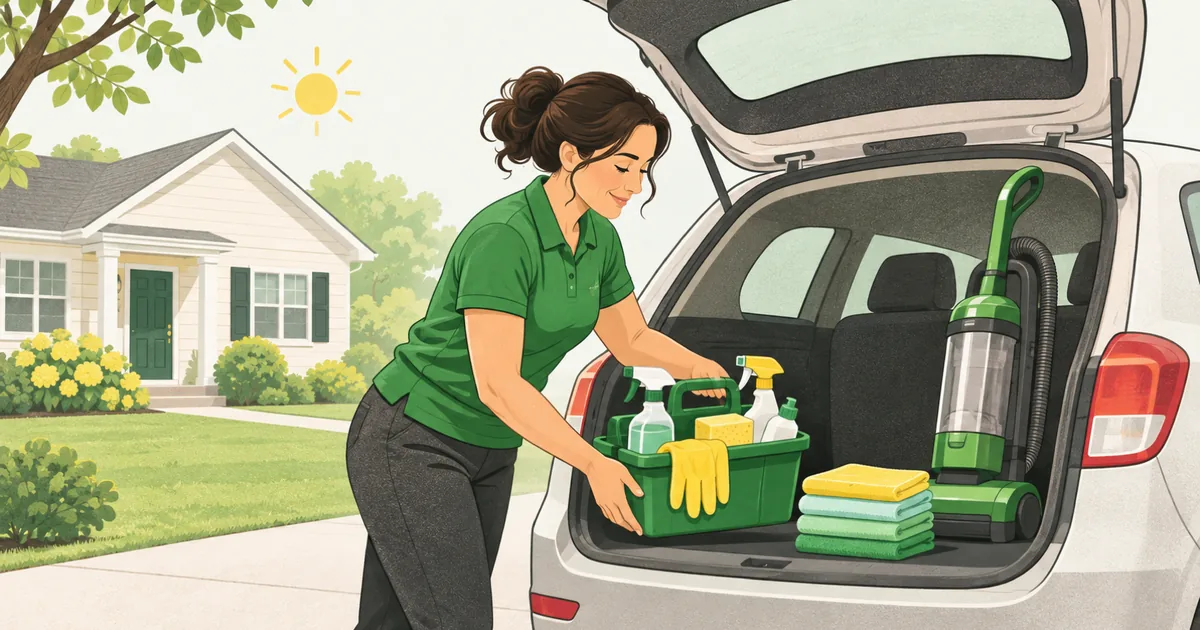
You can start a house cleaning business this month for $1,500 to $3,000, with no special license in most of the US. The cleaning part is the easy bit. The part that sinks most new owners is everything around it: pricing too low, skipping insurance, mixing personal and business money, and having no plan for getting the second, fifth and twentieth customer.
This guide is the version we wish existed when people asked us how to do it. Every step has the actual website you file on, what it costs in 2026, and the mistakes that cost real money. There are three small tools on the page: a startup cost estimator, a "how many clients do I need" calculator and a launch checklist that saves your progress.
The short version
- Pick what you clean. Residential (houses and apartments) is the easiest start. Commercial pays bigger contracts but takes longer to win.
- Do the math first. Decide your price per cleaner-hour and how many clients you need before you print a single flyer.
- Form an LLC with your state (from $50 to $500), or start as a sole proprietor and form one before you hire.
- Get a free EIN from the IRS and open a business bank account.
- Get a local business license from your city or county. Most states have no special license for house cleaning.
- Buy general liability insurance (about $44 a month for house cleaners) and a janitorial bond (about $125 a year).
- Buy a starter kit for $400 to $900. Don't buy commercial machines yet.
- Set prices by the cleaner-hour, not by what the cheapest competitor charges.
- Get your first 10 clients from your Google Business Profile, neighbors, Nextdoor, realtors and short-term rental hosts.
- Hire as employees, not 1099s, once you're turning work away.
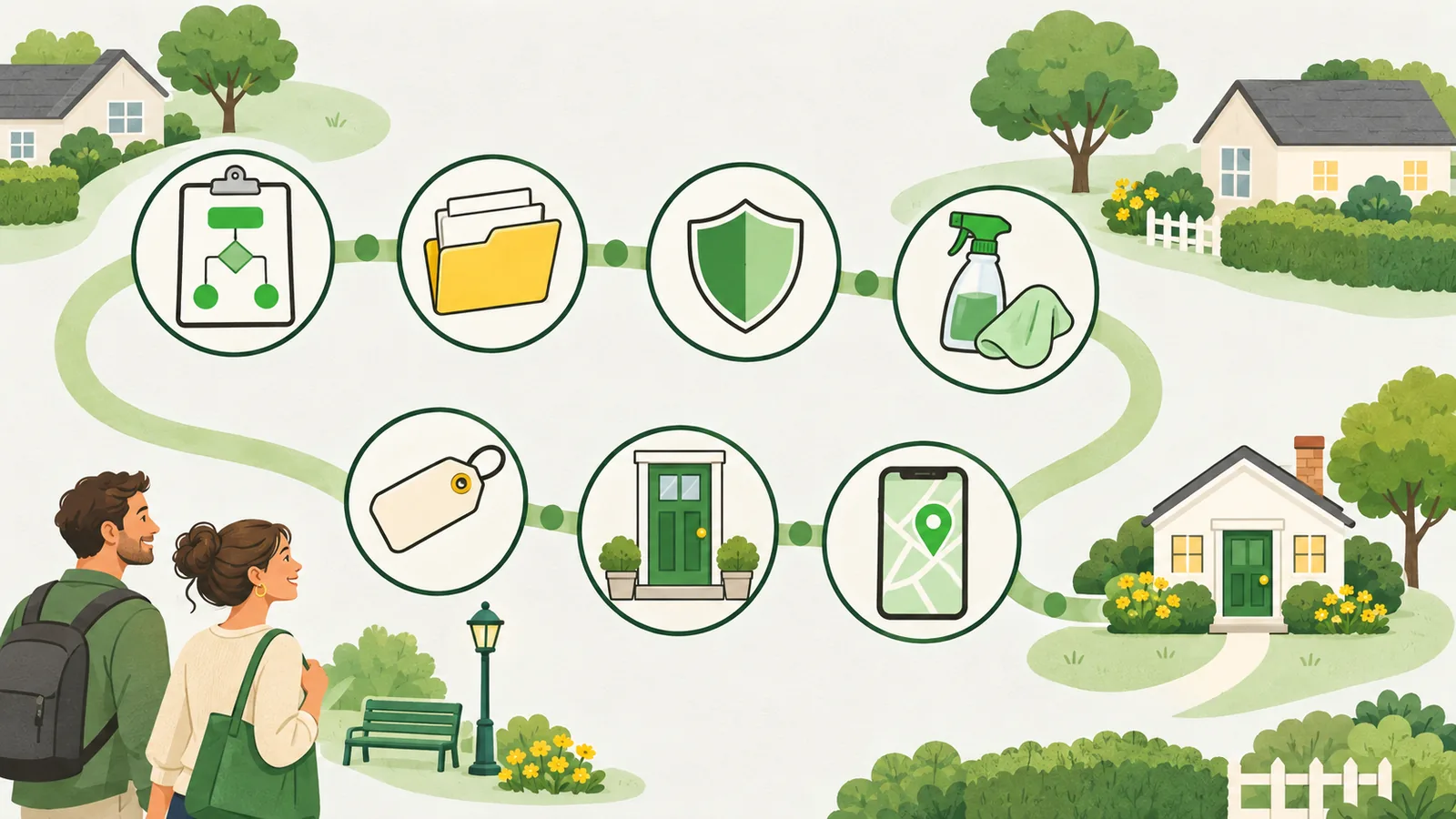
What it costs to start a cleaning business
Most guides give you a range so wide it's useless ("$2,000 to $200,000"). The real answer for a solo house cleaning business looks like this:
| Item | Typical cost | Notes |
|---|---|---|
| LLC filing | $50 to $500 one time | Depends on your state. Average is about $132. |
| Local business license | $25 to $150 a year | City or county. Some places charge nothing. |
| EIN | $0 | Free from the IRS. Never pay a site for it. |
| General liability insurance | $40 to $100 a month | House cleaners average about $44. |
| Janitorial bond | $125 to $200 a year | For $10,000 of coverage, 5 or fewer staff. |
| Starter supplies and equipment | $400 to $900 | Vacuum, microfiber, chemicals, caddy, mop. |
| Business cards, door hangers | $75 to $200 | 500 door hangers is plenty to start. |
| Website and domain | $0 to $200 a year | A Google Business Profile is free and matters more. |
| Booking and invoicing software | $0 to $50 a month | A spreadsheet works for the first 10 clients. |
Change the inputs below to see your own number. It runs in your browser and nothing is sent anywhere.
Startup cost estimator
First-year cost for a solo residential cleaning business. Numbers are 2026 typicals; your quotes will differ.
That's roughly 11 cleans at $150 to pay back year one's costs, and $50 of it is your state's yearly LLC fee or tax.
The one cost people forget is the gap. Your first month will have maybe four to eight paid cleans. Keep one to two months of personal expenses in the bank so a slow start doesn't push you into taking any job at any price.
Step 1: Choose residential, commercial or a specialty
"Cleaning business" covers very different businesses. Pick one to start. You can add the others later.
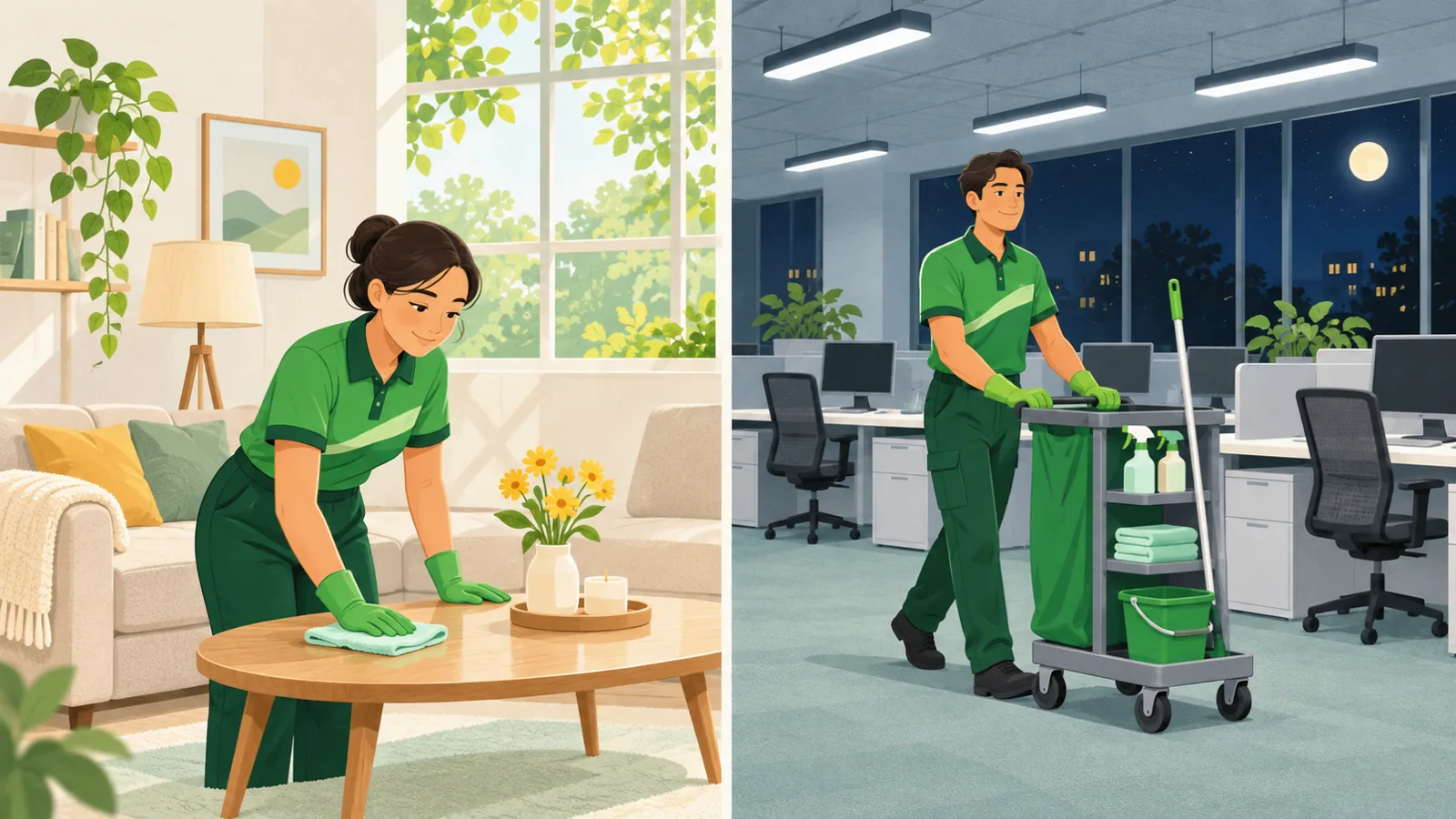
| Residential (house cleaning) | Commercial (offices, clinics, gyms) | Specialty (move-out, Airbnb, post-construction) | |
|---|---|---|---|
| Typical job | $120 to $250 a clean | $500 to $5,000+ a month contract | $200 to $600 a job |
| Hours | Weekdays, daytime | Evenings, nights, weekends | Whenever the job lands, often short notice |
| How you win work | Reviews, referrals, Google | Walkthroughs, written bids, proposals | Realtors, property managers, hosts |
| Sales cycle | Days | Weeks to months | Days |
| Insurance asks | General liability, bond | Higher liability limits, workers' comp, COI on file | Same as residential, plus damage worries |
| Best for | Your first year | Once you have staff and proof | Filling gaps in the calendar |
What the table doesn't show:
- Commercial is judged on showing up. A missed clean can lose an office account on the spot, even if the work has always been good. Before you sign one, know who cleans it if you're sick, your car breaks down or your one employee quits. An 8-year commercial owner in that Reddit thread described keeping "more layers of redundancy than passenger aircraft." Contracts are also price-sensitive: he lost a site over a $3 increase per clean.
- Rental turnovers are graded by strangers. Every guest is a new inspector. You can do everything right, get praise from the host, and still lose the account over one guest's 1-star cleaning review. Protect yourself by finishing every turnover with timestamped photos of each room and a checklist the host can see.
- Post-construction sites have their own rules. Show up with hi-vis, a hard hat and steel-toe boots every time, even if the builders are walking around in sneakers. The same owner was removed from a site over safety gear while builders on it wore sandals.
Our advice: start a residential cleaning business with recurring clients (weekly, every two weeks or monthly). Recurring work is what makes the business predictable. Use move-outs and rental turnovers to fill gaps, and go after commercial contracts once you have a crew and a few months of reviews.
Step 2: Write a one-page cleaning business plan
You don't need a 30-page business plan unless a bank is lending you money. You need one page that answers five questions honestly:
- Who exactly is your customer? "Dual-income families in [your zip codes] with homes over 1,800 sq ft" beats "anyone who needs cleaning."
- What do you sell? Standard recurring clean, deep clean, move-in/move-out. Write down what is and isn't included in each.
- What do you charge per cleaner-hour? See Step 8. Write the number down.
- How many clients do you need to pay yourself what you want? Use the calculator below.
- Where will the first 20 come from? Name the actual channels and people (Step 9).
Do a 15-minute market check
Before you set a price, call three local cleaning companies the way a customer would. Ask what they charge for a recurring clean of a 3-bed, 2-bath home, how long it takes, and when their next opening is. Then ask two or three neighbors who use a cleaner what they like and what annoys them.
One owner who did this in a small, fast-growing town shared what he found on r/sweatystartup: the three local companies charged $150 to $240 for a 3-bed, 2-bath maintenance clean of 2 to 3 hours, two of them had no openings at all, and the solo cleaners charging $40 to $45 an hour were known for showing up late and cancelling. That tells you a lot. There's demand, the going price is fine, and the gap is reliability, not a lower price.
How many clients do you need?
Work backwards from what you want to earn. Assumes you clean every job yourself.
That fits in a full-time week. Past about 35 hours of cleaning a week, plan your first hire.
If the number of hours that calculator shows is more than you can physically clean, that's not bad news. It tells you when you'll need to hire and that your plan has to include a second cleaner.
Step 3: Pick a name and form an LLC
Check the name first
Before you fall in love with a name, check three places:
- Your state's business name search. Every Secretary of State has one. The NASS directory links to all 50.
- The federal trademark database at tmsearch.uspto.gov. A name that's free in your state can still be someone's registered trademark.
- The domain and Google. Search "[name] cleaning [your city]". If a company 20 miles away already uses it, your reviews will get mixed up with theirs.
Names that say what you do and where ("Northside Home Cleaning") are easier to find on Google than clever ones ("Sparkle & Co").
Sole proprietor or LLC?
You can legally start cleaning houses as a sole proprietor today, using your own name, with no state filing. The problem: you're working inside other people's homes, around their things. If something serious goes wrong and it's more than your insurance covers, a sole proprietor's personal savings, car and home are on the line.
An LLC (limited liability company) puts a legal wall between the business and you, as long as you keep the money separate. It's cheap, usually one online form, and it looks more professional to commercial clients. The SBA's guide to business structures explains the options if you want the full picture.
What it costs in the most common states:
| State | Filing fee | Ongoing cost to keep it |
|---|---|---|
| California | $70 | $800 minimum franchise tax every year, starting with year one |
| Texas | $300 | No annual fee for most small LLCs, but you file a yearly franchise tax report |
| Florida | $125 | $138.75 annual report, due by May 1 |
| New York | $200 | $9 every two years, plus a required newspaper publication that runs $300 to $1,500+ depending on the county |
| Georgia | $100 | $50 annual registration |
| North Carolina | $125 | $200 annual report |
| Illinois | $150 | $75 annual report |
| Ohio | $99 | No annual report |
| Arizona | $50 | No annual report |
Fees change. Check your Secretary of State's site before you file.
BOI reports are no longer required
Many older guides tell you to file a Beneficial Ownership Information (BOI) report with FinCEN. Since August 2026, US-formed companies owned by US persons are permanently exempt. If a company emails you a "BOI deadline" notice, it's a sales pitch or a scam. FinCEN's BOI page has the official status.
Write a simple operating agreement
Even a one-person LLC should have a short operating agreement that says you own 100% and how the business is run. Banks often ask for it. Free templates are fine for a single-owner LLC.

Step 4: Get an EIN, open a business bank account, set up taxes
EIN
An Employer Identification Number is your business's tax ID. It's free from the IRS website and takes about 10 minutes. You'll need it to open a business bank account and to hire. Even solo, it means you can give clients and suppliers an EIN instead of your Social Security number.
Business bank account
Open it the same week you form the LLC. Every client payment goes in, every business expense comes out. Mixing personal and business money is the fastest way to lose the liability protection your LLC gives you, and it turns tax season into a week of digging through card statements. Any bank or credit union works. Pick one with free business checking and a decent mobile app for depositing checks.
Income tax
Nobody withholds tax from your cleaning income, so you have to do it yourself:
- Self-employment tax is 15.3% of your net profit (Social Security and Medicare), on top of income tax.
- Pay quarterly. The IRS expects estimated payments in April, June, September and January. Their estimated taxes page walks through it.
- A simple rule: move 25% to 30% of every payment into a separate savings account the day it arrives. You'll rarely be short.
- Track your mileage. Driving between clients is a deductible business expense, and for most cleaners it's one of the biggest deductions they have. The IRS standard rate was 70 cents a mile in 2025.
Sales tax on cleaning services
In most states, house cleaning is not subject to sales tax. A handful of states are different:
- Hawaii, New Mexico and South Dakota tax most services, which can include cleaning.
- Texas, Connecticut, Pennsylvania, New York and Washington, DC tax some cleaning of commercial or non-residential buildings. Residential cleaning is generally exempt in these, but the rules have exceptions.
If you're in one of those states, or you're starting commercial cleaning anywhere, check with your state's department of revenue before you send your first invoice. The SBA's state tax ID page links to every state's tax agency.
Step 5: Get the business licenses and permits you need
Here's the honest answer to "what license do I need to start a cleaning business": in most of the US there's no state-level license for house cleaning or janitorial work. What you usually need is local:
- A general business license (or "business tax registration") from your city or county. Expect $25 to $150 a year.
- A DBA ("doing business as") if you operate under a name that's different from your LLC's legal name. Usually filed with the county or state for $10 to $100.
- A home occupation permit in some cities if you run the business from home, even if clients never come there.
You'll need extra licensing only if you go beyond cleaning: pest control, mold remediation, biohazard or crime-scene cleanup, and some pressure-washing work (wastewater rules) all have their own rules.
The fastest way to get a definite answer is to call your city clerk or business license office and ask: "I'm starting a residential cleaning service run from my home, working in clients' homes. What do I need to register, and is there a home occupation permit?" The SBA's licenses and permits guide covers the federal and state side.
Step 6: Cleaning business insurance and bonding
Clients will ask "are you insured and bonded?" Commercial clients will ask for proof before you walk in the door. Here's what each policy actually does and what it costs.
| Coverage | What it pays for | Typical cost | Do you need it? |
|---|---|---|---|
| General liability | You break a client's TV, a client trips over your vacuum cord, you damage a floor | About $44 a month for house cleaners | Yes, from day one |
| Janitorial (fidelity) bond | A cleaner is convicted of stealing from a client | About $125 a year for $10,000 of coverage, 1 to 5 staff | Yes. It's cheap and clients ask. |
| Workers' compensation | An employee gets hurt on the job (back injuries and slips are common) | Varies a lot by state and payroll | Required once you have employees in almost every state |
| Commercial auto | Accidents while driving to and between jobs | Often a small add-on to your auto policy | Check your personal policy. Many exclude business use. |
| Tools and equipment | Theft of your vacuum and kit from your car | Low, often bundled | Nice to have |
Prices above are from Insureon's 2026 figures for house cleaners and SuretyBonds.com's janitorial bond rates. Your quote will depend on your state, revenue and headcount.
Two details most guides skip:
- "Care, custody and control." Standard general liability often excludes damage to property you're working on, which is most of what a cleaner touches. Ask your agent directly whether damage to a client's belongings while you're cleaning them is covered. If not, ask for the endorsement that adds it.
- A bond doesn't replace insurance. Most janitorial bonds only pay after an employee is convicted of theft, and some have a per-claim deductible you'll owe. Think of the bond as something you show clients for reassurance and the insurance as what actually protects you.
Get quotes from at least two or three places. NEXT Insurance, Insureon, Thimble, Hiscox and The Hartford all sell small cleaning business policies online, and a local independent agent can compare carriers for you. Once you're insured, save a PDF of your certificate of insurance (COI). Commercial clients and property managers will ask for it.
Step 7: Buy cleaning business supplies and equipment (but not too much)
New owners overspend here more than anywhere else. You need a kit that cleans a whole house well and fits in your car. You don't need a carpet extractor or a floor machine until a paying job calls for one.
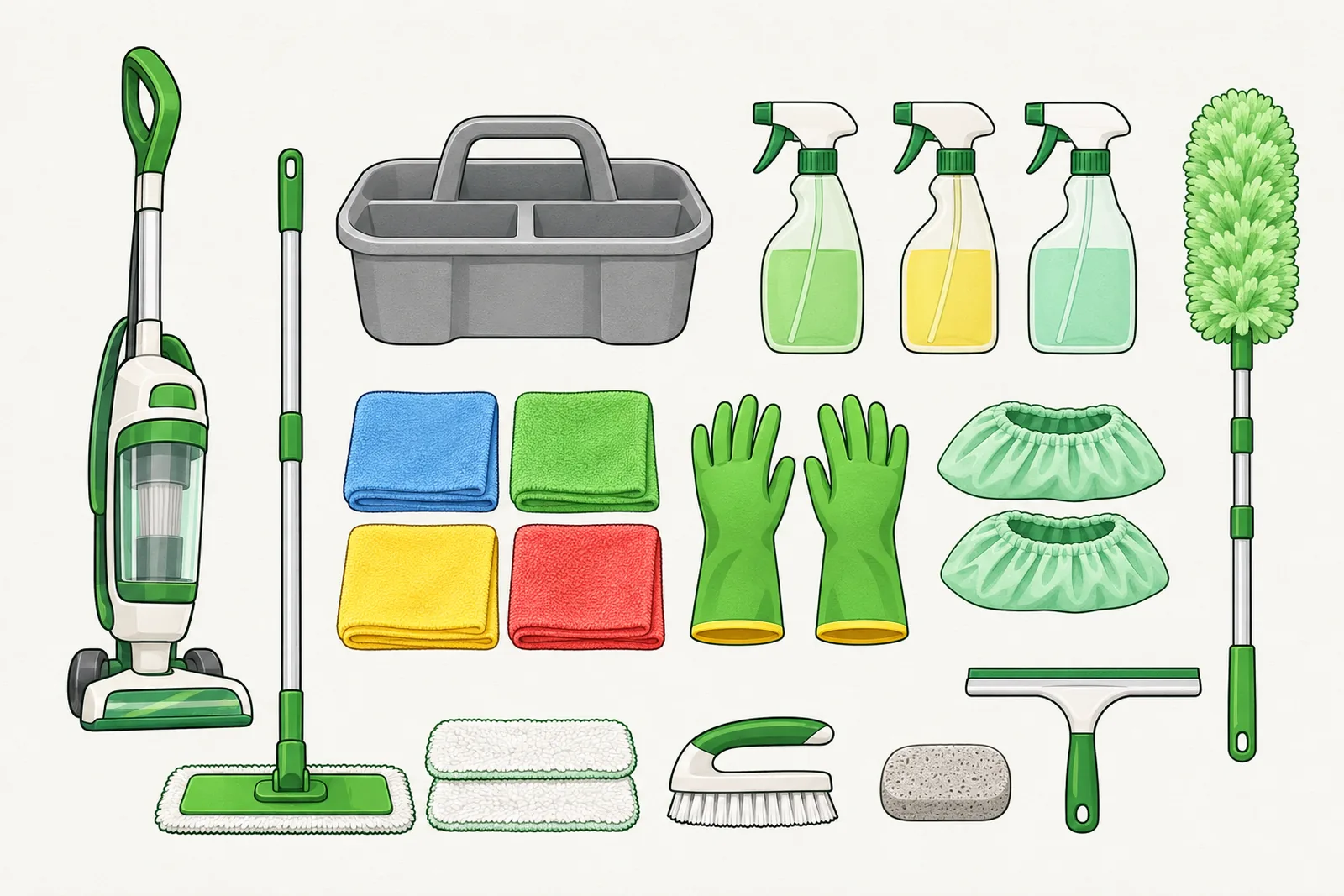
| Item | Budget | Why it matters |
|---|---|---|
| Vacuum (upright or backpack, HEPA) | $200 to $450 | Your most-used tool. A backpack vacuum is faster on multi-room homes. |
| Microfiber cloths, 4 colors, 48+ | $40 to $70 | One color each for kitchen, bathroom, toilet, glass. Clients notice. |
| Flat microfiber mop and spare pads | $40 to $80 | One clean pad per home, washed between jobs. |
| Concentrated chemicals (all-purpose, glass, bathroom, degreaser, disinfectant) | $60 to $120 | Buy concentrate and dilute into labeled bottles. Much cheaper per clean. |
| Labeled spray bottles | $15 to $30 | Label every bottle. Once you have staff, OSHA's hazard communication rules expect it. |
| Caddy, scrub brushes, grout brush, pumice stone, squeegee | $40 to $70 | The details are what earn reviews. |
| Extendable duster | $20 to $40 | Ceiling fans and tops of cabinets. |
| Gloves, shoe covers, knee pads | $25 to $50 | Shoe covers at the door make a strong first impression. |
| Laundry bag and a system for washing cloths | $15 to $30 | Dirty microfiber spreads grime instead of removing it. |
Where to buy: a local janitorial supply ("jan-san") distributor will usually beat big-box prices on chemicals and microfiber once you buy in bulk. Uline, Sam's Club and Costco are fine for the basics. Keep every receipt. It's all deductible.
Use your chemicals or theirs? Use your own. You know how they behave, you're not stuck with whatever is under the sink, and your results are consistent. Offer to use the client's products if they ask, and note any surfaces they want treated a certain way (natural stone, unsealed wood).
Teach everyone to read the label. The fastest way to lose a client is a ruined surface: bleach on a wood floor, an acid cleaner on marble, an abrasive pad on a glass cooktop. Write the "never use on" list into your checklist. And don't start mixing and selling your own cleaning products. Repackaging chemicals brings labeling rules and liability that have nothing to do with cleaning houses.
Step 8: Set your prices (by the cleaner-hour)
This is where most new cleaning businesses fail. They look up what the cheapest company in town charges, go a little lower, and discover six months later that after gas, supplies, insurance and taxes they're earning less than minimum wage.
Price from your costs instead:
- Know how long a clean takes. A common rule: a standard clean covers about 500 sq ft per cleaner-hour, a deep clean about 350, and a move-out about 300. A 2,000 sq ft home is about 4 cleaner-hours standard, or about 6 for a deep clean.
- Know your labor cost per hour. The national median wage for maids and housekeeping cleaners is about $17.07 an hour (BLS data via O*NET). Add around 15% for payroll taxes and workers' comp. That's about $19.60 an hour, fully loaded. Even if it's just you now, pay yourself as if you were the employee.
- Labor should be about half the price. The other half pays for supplies, gas, insurance, software, marketing, the time you spend not cleaning, and profit.
That gets you to roughly $40 to $60 per cleaner-hour, depending on your market. For that 2,000 sq ft standard clean, it's about $150 to $160 every two weeks. One-time and deep cleans should cost more, and weekly clients can get a small discount because their homes are faster to clean.
Set a minimum. A small apartment can come out at $80, but you still drive there and back. Most companies set a minimum of $100 to $150 per visit.
Work it out by the hour, quote a flat price. Long-time cleaners often say "never charge by the hour," and for clients they're right: a flat price per visit is easier to say yes to, and you get rewarded for getting faster. Use the cleaner-hour math to set that flat price, then check it against your real times after the first few visits.
Decide who you won't clean for. The clients that cost you money tend to look alike:
- They book less than once a month but expect the house to look like a weekly client's. Offer them a deep clean price every time, or a minimum of monthly.
- They add "while you're here" jobs like dishes, laundry or inside the fridge. Anything outside the written scope is an add-on with a price.
- They haggle on the first call. They'll haggle on every price increase too.
Try different homes and crew sizes with our free house cleaning price calculator, or read the full house cleaning pricing guide for flat-rate vs hourly vs square-foot pricing.
Step 9: How to get your first cleaning clients
You don't need a big marketing budget. You need to show up in the places where people near you are already looking, and make it easy to say yes.

1. Set up your Google Business Profile today. It's free at google.com/business. Set it up as a service-area business (you can hide your home address), list the zip codes you cover, add real photos of your work, and list each service separately. When someone searches "house cleaning near me", this profile does more than a website. You can see how you'd look next to local competitors with the free Fieldmox business grader.
2. Ask for reviews from the first clean. Send the review link by text the same day, while they're happy. Ten good reviews in your first two months does more for you than any ad.
3. Tell your own network, specifically. Not "I started a cleaning business!" but "I have two openings for every-two-weeks cleans in [neighborhood] starting next week. $150 for a 3-bed. Who do you know?" Specific posts get shared.
4. Nextdoor and local Facebook groups. Claim a free Nextdoor business page and answer "can anyone recommend a cleaner?" posts quickly. These threads are where neighbors make decisions.
5. Realtors and property managers. Every sale and every lease turnover needs a move-out or move-in clean, often on short notice. Bring a one-page price sheet to three local real estate offices and two property management companies. One good realtor can send a job every week.
6. Short-term rental hosts. Hosts need reliable turnovers between guests. Marketplaces like Turno connect cleaners with hosts, or find hosts in your area through local host groups.
7. Door hangers around every client. When you clean a home, leave door hangers on the 20 to 30 houses around it. Neighbors trust what the house next door uses, and clustered clients mean less driving.
8. Ask the businesses you already use. Your kid's daycare, your dentist, your church, the gym, the small office down the street. Small commercial accounts like these rarely go out to bid, and they'd rather hire someone they know. One cleaning couple got their first contract by asking their daughter's daycare owner: 8 cleans a month at $175 each, about 2 hours per visit, $1,400 a month from one conversation. For jobs like this, price by listing the tasks, timing them, and multiplying by how often they want it done.
9. Pick one or two neighborhoods to own. Every owner says the same thing eventually: drive time eats the profit. Say no, or charge a travel fee, for one-off jobs far outside your area until your core zip codes are full.
10. Be careful with paid lead sites. Thumbtack, Angi and similar sites charge you per lead, whether you win the job or not, and you're competing with five other cleaners on price. They can fill a calendar in an emergency. They're not a plan.
Make booking easy. Answer calls and texts fast (within an hour wins most jobs), give a clear price, and confirm the day before by text. Most lost bookings are slow replies, not high prices.
Step 10: Hire your first cleaner (the legal way)
You'll know it's time when you're turning down work or cleaning six days a week. Get the legal side right from the first hire, because fixing it later is expensive.
Employee or 1099 contractor? Most cleaning companies want to use 1099 contractors to avoid payroll taxes. But if you set the schedule, tell them how to clean, supply the products and set the price, the IRS and most states will treat them as employees. In California and several other states, the "ABC test" makes this even stricter. Read the IRS guidance on employees vs contractors before deciding. Misclassification can mean back taxes, penalties and unpaid overtime claims.
What to set up before day one:
- Payroll. A payroll service like Gusto, ADP or QuickBooks Payroll handles withholding, filings and W-2s for roughly $50 to $100 a month plus a small per-person fee.
- Form I-9 for every new hire, within three days of starting. Get it at uscis.gov/i-9.
- State new hire reporting. Every state requires it. Find your state's site here.
- Workers' compensation insurance before they work a single shift.
- A background check, which your clients will expect. Services like Checkr run them for small businesses.
Pay for drive time. Under federal wage law, time spent driving between clients during the workday counts as hours worked (DOL Fact Sheet 22). Build it into your prices. Don't leave it out of paychecks.
Train from a checklist. Write down your standard clean room by room, in the order you do it. A new cleaner can follow it from day one, and every client gets the same clean no matter who shows up.
Step 11: Set up simple systems before you're busy
At 5 clients, a notebook and your phone's calendar work. At 25 clients with two cleaners, things go wrong: double bookings, a forgotten key, a client who wasn't invoiced, a cleaner who went to the wrong address.
Whatever tools you use, make sure you can do these five things without thinking about them:
- Send a clear quote that says exactly what's included.
- Schedule recurring cleans that repeat automatically, so you're not rebuilding the week every Sunday.
- Give your cleaners the day's jobs with addresses, entry instructions, notes and the checklist on their phone.
- Invoice and get paid the same day the clean is done, by card or bank transfer, with automatic reminders for late payers.
- Keep notes on every home: pets, alarm codes, "don't use bleach on the counters", where the key is.
What cleaning business owners say they'd do differently
We read through a long r/sweatystartup thread where people who run cleaning companies answered one question: knowing what you know now, what would you do differently? These came up again and again:
- "Don't underprice. You'll regret it fast." Raising prices on existing clients is much harder than starting at the right number. The clients who chose you because you were cheapest are the first to leave when you raise prices.
- Spend on cleaning, not on looking like a company. The owners who lost money early lost it on websites, branding packages and formation services. A Google Business Profile, cards and a good first clean got them further.
- The first clean decides everything. Do one very thorough initial clean, priced as a deep clean, then maintain it. A residential team that has cleaned since 1992 put it simply: work really hard on the first few homes and the referrals take care of the rest.
- Keep a cash cushion even when it's going well. A solo cleaner with a full book lost four families in one year, all for money reasons, none for the cleaning. Save two or three months of expenses before you count on the income.
- Hiring is the hard part. Commercial owners said good cleaners won't look at jobs paying minimum wage. You'll need to pay a few dollars above it, have clear written expectations, and be ready to let go of new hires who don't meet them, or risk losing the client.
- Treat clients like relationships, not transactions. A commenter with 45 years in commercial cleaning said his best lesson was looking after clients like family: "It is much harder to replace a friend than a corporation."
Not everyone in the thread was positive. Several people said it's hard physical work with thin margins if you price badly or can't keep staff. It lines up with the rest of this guide: the businesses that work are the ones that price from their costs, stay in a tight area and treat reliability as the product.
Your launch checklist
Tick items off as you go. Your progress is saved in this browser.
Frequently asked questions
How much does it cost to start a cleaning business?
For a solo residential cleaning business, expect $1,500 to $3,000 in your first year, before the business pays for itself. That covers an LLC, local license, insurance and bond, a starter supply kit and basic marketing. It goes up in states with high LLC fees (California's $800 franchise tax, New York's publication requirement), or if you buy commercial equipment early.
Do I need a license to clean houses?
In most states there's no special state license for house cleaning. You'll usually need a general business license from your city or county, and possibly a DBA and a home occupation permit. Call your city's business license office to confirm.
Do I need an LLC to start a cleaning business?
No, you can start as a sole proprietor. But an LLC is cheap in most states and protects your personal assets if something goes wrong in a client's home that's bigger than your insurance. Most owners form one before their first hire at the latest.
Is a cleaning business profitable?
It can be. Startup costs are low and recurring clients make income predictable. Solo, you keep most of what you charge after supplies, gas, insurance and tax. Once you have staff, established residential companies commonly report net margins of around 10% to 20%. The businesses that struggle are almost always the ones that priced too low early and can't raise prices on their existing clients.
How much can I make with a house cleaning business?
Solo, a full week is about 15 to 20 cleans. At $150 a clean, that's $9,000 to $13,000 a month in revenue, before supplies, gas, insurance and taxes. Few owners clean that much for long, which is why growth usually means hiring. Use the client calculator above with your own numbers.
Can I start a cleaning business with no experience?
Yes, but get experience before you charge full price. Clean a few homes for friends at a discount in exchange for honest feedback and reviews, time yourself on every clean, and build your checklist from what you learn. Associations like ARCSI (residential) and ISSA (commercial) offer training and certifications that are worth having once you're up and running.
Do I need to be bonded to clean houses?
It's rarely a legal requirement, but many clients and nearly all commercial contracts expect it. At around $125 a year for $10,000 of coverage, it's one of the cheapest ways to look trustworthy. Remember it's not a replacement for liability insurance.